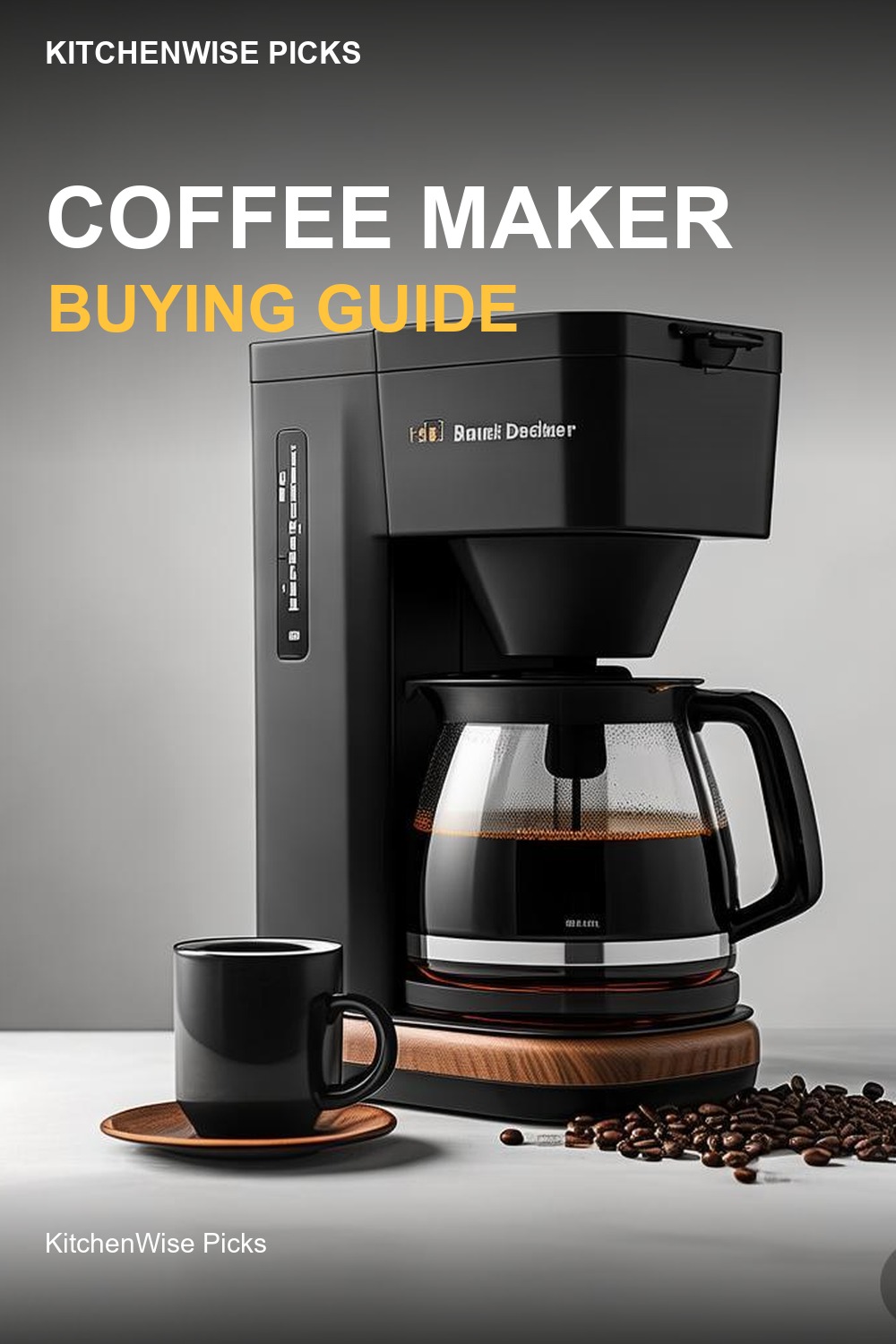
Coffee Maker Buying Guide: Drip, Espresso, or Pour-Over?
If you’re staring at a wall of coffee makers and feeling overwhelmed, you’re not alone. The real question isn’t “which is the best brand”—it’s “which brewing style matches your morning routine, budget, and taste tolerance.” This guide breaks down the three main types honestly, so you can buy once and not regret it.
What to Look For in Any Coffee Maker
Before choosing a style, check these specs across all machines:
- Brew temperature: The sweet spot is 195–205°F. Anything cooler makes sour coffee; anything hotter makes it bitter. Look for “brew temp” or “thermal stability” in the listing.
- Carafe type: Glass carafes sit on a hot plate (cheap, but burns coffee after 30 minutes). Thermal steel carafes keep coffee hot for hours without scorching—worth the extra $20–$40.
- Timer / programmability: If you want coffee ready when you wake up, a 24-hour programmable timer is non-negotiable. For pour-over, it’s irrelevant.
- Grinder included? Pre-ground coffee loses flavor in days. A built-in burr grinder (not a blade grinder) makes a huge difference, but it adds $50–$100 to the price.
- Water reservoir: Removable tanks are easier to fill and clean. Fixed tanks are fine if you have a kettle nearby.
Drip Coffee Makers
Cost: $30–$200. Effort: Minimal. Result: Consistent, mild, middle-of-the-road.
These are the workhorses of American kitchens. A drip machine heats water, drips it over grounds in a filter, and collects the coffee in a carafe. You get decent coffee with zero skill required.
Who it suits: Families, office break rooms, or anyone who drinks multiple cups before noon. If you’re not picky about single-origin notes and just want a reliable morning jolt, this is your pick.
Key specs to prioritize: Thermal carafe over glass, a showerhead-style dispenser (wets grounds evenly), and a brew-strength selector if you like bold coffee. Skip machines with fancy LCD screens—they fail first.
Best budget tier: $50–$80 gets you a solid machine with a thermal carafe and timer. Above $150, you’re paying for aesthetics or smart features (Wi-Fi, app control) that don’t improve the coffee.
Espresso Machines
Cost: $80 (manual) to $1,500+ (automatic). Effort: High, unless you buy a super-automatic. Result: Rich, concentrated, crema-topped shots.
Espresso is a different beast. It forces hot water through finely-ground coffee under 9 bars of pressure. The result is intense and delicious—but the learning curve is real.
Who it suits: Latte and cappuccino lovers who are willing to tinker. If you’re not ready to weigh beans, time shots, and steam milk, a semi-automatic machine will frustrate you. A super-automatic (press a button, get a latte) costs $800+ but removes the skill gap.
Key specs to prioritize: A 15-bar pump (standard, not a gimmick), a 58mm portafilter (professional size, better extraction), and a steam wand that actually froths milk (not a cheap “panarello” attachment). Built-in grinders on cheap machines are usually poor—buy a separate grinder if you can.
Best budget tier: $80–$150 for a manual lever machine (Stovetop moka pots are a cheaper cousin). $300–$600 for a decent semi-automatic. Anything under $200 that claims “espresso” is usually a glorified drip machine with pressure—avoid unless you’re desperate.
Pour-Over (Manual)
Cost: $15–$80 for equipment; $0 ongoing. Effort: High, but ritualistic. Result: Clean, bright, flavorful coffee when done right.
Pour-over is just a cone, a filter, and a kettle. You control water temperature, pouring speed, and grind size manually. The payoff is exceptional clarity—you taste fruity and floral notes that drip machines crush.
Who it suits: Single-cup drinkers, hobbyists, or minimalists. If you enjoy the process and don’t mind 5 extra minutes, this is the cheapest way to “upgrade” your coffee. It’s also the easiest to travel with.
Key specs to prioritize: A gooseneck kettle (precise pouring—this matters more than the cone), a burr grinder, and a scale. The cone itself can be plastic, ceramic, or metal; ceramic holds heat better but breaks. Paper filters give cleaner cups than metal mesh.
Best budget tier: $15–$30 for a simple plastic V60-style cone and filters. A gooseneck kettle runs $40–$60, but a regular kettle works if you’re careful. Total setup under $100 beats a $200 drip machine in flavor, easily.
Top Picks: At a Glance
| Pick | Best for | Key feature to check |
|---|---|---|
| Basic Drip Machine | Families, busy mornings | Thermal carafe + programmable timer |
| Mid-Range Drip | Flavor-conscious but lazy | Showerhead dispenser + brew strength control |
| Manual Espresso | Tinkerers, latte fans | 58mm portafilter + real steam wand |
| Super-Automatic Espresso | Convenience above all | One-touch milk frothing, built-in grinder |
| Pour-Over Kit | Single-cup purists | Gooseneck kettle + burr grinder |
| Moka Pot (budget espresso) | Camping, small kitchens | Aluminum or steel, stovetop safe |
Common Mistakes & FAQ
Mistake #1: Buying a glass carafe machine and leaving it on. The hot plate ruins coffee in 20 minutes. Spend the extra $15 on thermal steel.
Mistake #2: Ignoring the grinder. Pre-ground coffee is stale by the time you open the bag. A $30 burr grinder improves any machine more than a $200 upgrade.
Mistake #3: Overpaying for “espresso” features. A $100 machine labeled “espresso” often produces muddy, bitter shots. You’re better off with a moka pot.
How often should I clean my coffee maker? Drip machines need descaling every 1–3 months (vinegar or citric acid). Espresso machines need backflushing weekly and a full descale monthly. Pour-over cones just rinse—but replace filters every batch.
How long do coffee makers last? Drip machines: 3–5 years with regular descaling. Espresso machines: 5–10 years, but seals and gaskets need replacing every 2–3 years. Pour-over gear lasts indefinitely if you don’t drop it.
Can I use a drip machine for pour-over? Not really. Drip machines spray water unevenly and too fast. You’ll get bitter, over-extracted coffee. They’re different tools.
The Bottom Line
Match the machine to your personality, not the marketing. If you hate morning decisions, buy a reliable drip with a timer. If you love espresso drinks but have no patience, save for a super-automatic. If you’re broke but curious, get a pour-over cone and a decent grinder—you’ll learn a lot for $50.
We may earn a commission when you buy through links on this page, at no extra cost to you. That said, we only recommend what we’d buy ourselves. Happy brewing.
For a full range of options, browse best coffee maker on Amazon to compare prices and current models.