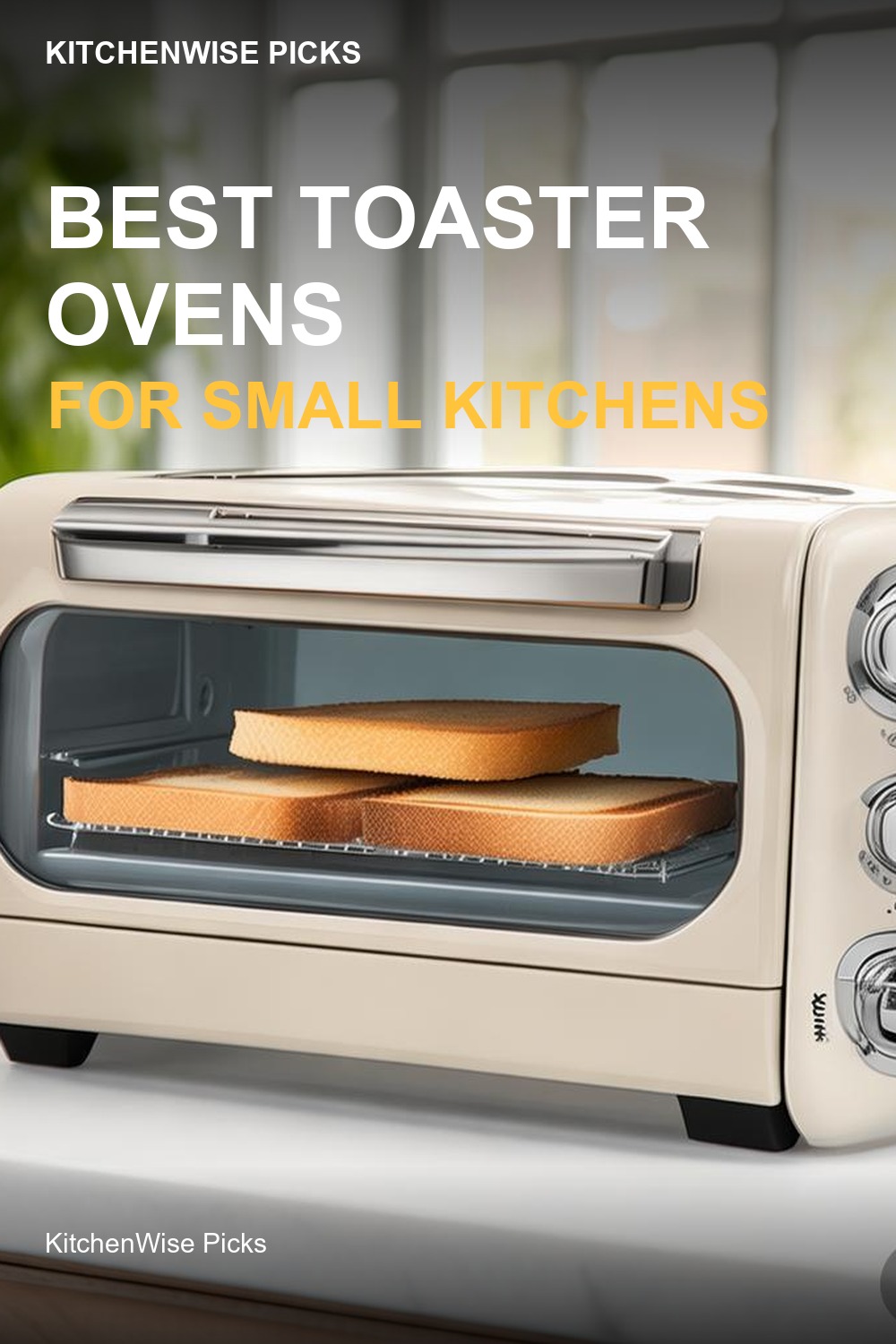
Best Toaster Ovens for Small Kitchens: 2026 Picks
If your counter space is measured in inches, not feet, a full-size oven or a bulky air fryer might not make sense. A toaster oven is the middle ground: it toasts, bakes, broils, and often air-fries, all in a footprint that fits under a cabinet. This guide is for apartment dwellers, dorm residents, and anyone who cooks for one or two but still wants real oven results without firing up the big appliance.
Toaster Oven vs. Air Fryer vs. Microwave: What Each Does Best
Before you buy, know the trade-offs:
- Microwave: Fastest for reheating liquids and leftovers. But it makes bread soggy and can't brown or crisp. It's a reheater, not a cooker.
- Air fryer: Excellent for frozen fries, chicken wings, and anything you want crispy with little oil. But most are round or bulky, and they're poor at baking a small casserole or toasting an open-faced sandwich evenly.
- Toaster oven: The most versatile. It toasts bread, bakes cookies, broils fish, and can air-fry if it has a fan. It's slower than a microwave and uses more energy than a dedicated air fryer, but it replaces both if you choose a model with a convection fan.
For a small kitchen, the toaster oven wins because it does 80% of what the other two do, in one box.
What to Look For: Size, Footprint, and Features
Measure your counter depth first. Most toaster ovens are 12–14 inches deep and 10–12 inches wide. If you have less than 12 inches of depth, you're limited to "slim" models—they exist, but they toast only two slices at a time.
Here's the spec checklist:
- Capacity: Look for a stated interior volume of 0.5–0.6 cubic feet for a two-slice model; 0.7–0.9 for a four-slice or small chicken. Don't trust the "9-in-1" marketing—check the interior dimensions.
- Convection fan: This is non-negotiable if you want air-frying and even baking. The fan circulates hot air, cutting cook time by up to 20%. Without it, you're just getting a basic toaster with a door.
- Toast settings: Look for a dedicated toast function with at least 5 shade levels. Cheap models use a timer that burns the top; better ones have a sensor or a dual-element design.
- Crumb tray: Must slide out from the front or bottom. If it's not removable, you'll be shaking crumbs out over the sink for years. A non-stick interior also makes cleanup bearable.
- Controls: Physical knobs are easier to use than touchscreens when your hands are greasy. Digital timers are fine, but make sure the display is readable in low light.
- Safety features: Auto shut-off after 2–4 hours, cool-touch exterior (or at least a cool-touch handle), and a door that stays cool enough to touch. The exterior walls of cheap units can hit 200°F+—a hazard if your kitchen is tiny and you're brushing against it.
Top Picks: Three Archetypes by Kitchen Size
| Pick | Best for | Key feature to check |
|---|---|---|
| Slim countertop model | Tiny galley kitchens, under 12" depth | Exterior width under 14", front crumb tray, 4-slice capacity |
| Compact air-fry combo | Most small kitchens, 12–14" depth | 0.6 cu ft interior, convection fan, basket-style air fryer accessory |
| Large-capacity toaster oven | Studio apartments, cooking for two | 0.9 cu ft interior, fits a 9x13 pan, slide-out crumb tray |
1. Slim Countertop Model (Under 12" Depth)
This is your only choice if you have a narrow strip of counter next to the sink. Look for a unit that's less than 14 inches wide and 12 inches deep. You'll sacrifice air-frying—most slim models skip the fan—but they toast, bake a small pizza, and reheat leftovers without turning your kitchen into a sauna. Check for a quartz heating element, which toasts faster than standard coils.
2. Compact Air-Fry Combo (Most Common Pick)
This is the sweet spot for most rentals. It's about 15 inches wide and 13 inches deep, fits a 12-inch pizza, and includes a convection fan that doubles as an air fryer. You'll get a mesh basket or tray for fries, and it can roast a small chicken (4–5 lbs) if you're patient. The best models have a "toast" setting that doesn't require you to set a timer manually.
3. Large-Capacity Toaster Oven (Studio Apartment Hero)
If you have a proper 18-inch counter but no full-size oven, this is your replacement. It fits a 9x13 baking dish and a 12-cup muffin tin, and its convection fan circulates heat well enough to bake a sheet of cookies evenly. The trade-off is weight—these run 20+ pounds—and they take up real estate. But for a studio, it's effectively a second oven.
Common Mistakes and FAQ
Mistake: Buying by wattage alone. 1800W doesn't mean better toasting if the element placement is cheap. Check reviews for "uneven browning" complaints.
Mistake: Ignoring the crumb tray. If it's not removable, you'll be cleaning with a brush and a prayer.
Mistake: Assuming air-fryer mode is the same as a standalone air fryer. It's not. A toaster oven's fan is less powerful, so you'll need to shake the basket halfway and add 2–3 minutes. It works, just not as fast.
FAQ: Can I leave it plugged in? Yes, but unplug it if you're leaving home for hours. Most models have auto shut-off, but why risk it?
FAQ: Will it toast as well as a $20 toaster? Usually better, because the chamber is larger and the heat distributes more evenly. The downside is it takes 3–4 minutes to preheat, versus 60 seconds for a slot toaster.
FAQ: What about energy use? A toaster oven uses about 1500W, which is less than a full-size oven (2400W+). For a single meal, it's cheaper to run.
Bottom Line
Buy the smallest toaster oven that fits your actual cooking habits. If you only toast and reheat, a slim model is fine. If you want air-fried wings and roasted vegetables, get the compact combo. And if you're replacing a full oven, go large. Measure your counter, check the crumb tray, and make sure the exterior stays cool.
We may earn a commission when you buy through links on this page, at no extra cost to you. That helps us keep writing practical guides like this one. Happy toasting.